Fascia Fitness
Fascia Fitness
What are the fascia?
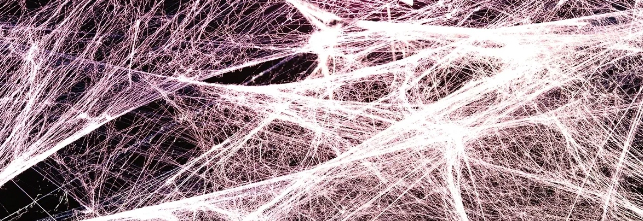
The Fascia is a network of connective tissue that covers and invades all parts of the body. It is a sensory organ innervated by many sensory nerve endings, such as mechano-receptors and nociceptors, which may become the source of myofascial pain syndromes.
Mechano-receptors are sensors found in tissues such as muscles, ligaments, and tendons, sensing the state of the tissue of which it is a part, and informing the command center of changes in movement. Nociceptors are sensors that provide pain signals to inform the command center of damage to the tissue and where they are located.
Any muscle in the body has a part consisting of fascia. Therefore, fascia also goes under the name "Myofascia" (muscle fascia). Fascia connects all the small and large parts of the body. It envelops, it invades, it surrounds everything, even down to the little iris of the eye.
We could say that all body-parts are submerged in fascia, that includes the white membranous stuff that can be seen in a piece of meat! You can see it everywhere, inside and outside of the meat! You will also know how tough it is, as it takes a sharp knife and some muscle power to cut through it.
What does fascia do?
Fascia connects and covers the entire body like a large sock- without the borders that are characteristic of muscles. Muscles have a start and an end point, usually from one bone to another via the tendons. Fascia is the same everywhere and covers everything from the inside out. Joints are covered in fascia as well, and can feel stiff. Certain parts of your body can feel stiffer especially as we get older, but also after hard physical labor.
New research has recently proven that most of the pain and discomfort we used to blame on the muscles should actually be blamed on the fascia. If, for example, you go to the gym or do some hard physical work and get really sore, then this pain is due to the fascia and not, as we used to think, the muscles, that are aching the day after.
Why is this important to us?
It is important for anyone who has a problem in ANY part of the body. As fascia are everywhere, it is part of any problem you encounter, be it a sports injury, a back problem, a neck problem, a carpal-tunnel syndrome, a knee problem, a tennis elbow, etc. Fascia will ALWAYS be part of the problem one way or another.
It was an Italian physiotherapist who changed the convention after over 40 years of studying and researching the fascia and the strategies the body/fascia is utilizing to deal with injuries and problems encountered in the body. He shared this knowledge with the rest of the world. Fortunately, the therapeutic world has not been the same since!
For example, someone comes in with knee pain. The knee is examined and there is no restriction in the knee itself. The restriction is found in the suspenders that hold the knee in place. There are "cables" on each side of the knee, on the front (downward and upward), and on the back (both up and down) and on both sides. If just ONE of these cables is of a different tightness than the other side, then there is a problem. There has to be a balance on all sides, otherwise you will have one cable that will pull the knee structures in a certain direction that will irritate or inflame, causing pain and disability. A cable consists of tendons, muscles and FASCIA.
The treatment will consist of locating the restriction, which is called a densification, somewhere in the cable on the side of the knee. The side could easily be for example, in the quadriceps. After our examination has found that there is a fascial restriction in the quadriceps, we proceed to manipulate this "densification" until it has regained its normal elasticity (4-8 minutes) and the knee will have regained its balance with the same tension on all its supporting sides and the irritation and inflammation will subside and the pain will be gone. However, usually several points need to be treated.
The pain could also be located in the hip or pelvis because they are also connected to the same cables.
This procedure applies to every joint in the body. All your articulations have cables suspended around them that need to have the same balanced tension. If this is not the case, problems appear with the balance of a particular joint that at some point will cause irritation and later inflammation.
We need to create, or recreate, a similar tension around all our joints by examining the surrounding parts and looking for restrictions in the connective tissue so as to keep them in harmony with their neighbors. We cannot have the fascia contracting these tendon, ligament and muscle cables, and causing pulling or deviations in the direction in which these cables should be running in.