African Inventions
African Inventions
Suppressed non-African inventions
Altered World History
World’s oldest Cosmic Calendar, S-Africa (75K–160K)
World’s Oldest continually operating University

University of al-Qarawiyyin, Fez, Morocco (877AD)

Microsonic energy:
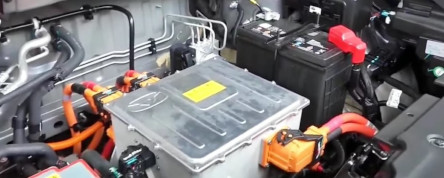
Maxwell Sangulani Chikumbutso’s Saith Technologies developed a green energy technology, which is revolutionary because it converts radio frequencies directly into clean and renewable energy. The $14K Saith FEV is a fully self-sustaining electric vehicle that runs solely on radio waves.
The radio frequencies are measured in nanovolts, and he has found a way to harness this energy by creating 70% of the components needed for this micro-sonic energy himself.
He developed a zero-fuel, zero-emission aircraft using breakthrough clean energy technology. No jet fuel. No solar panels. No limits. A self-charging plane:
Self powered vehicle:
Maxwell’s V2V (Vehicle-to-Vehicle) communication technology defied skeptics by saving lives in real-time, thereby rewriting the rulebook of global automotive innovation and safety. African AI providing a wireless car-collective eco-system.
TV that Powers Itself:
Bioelectric resonance:
Project Nyoka (Afr: snake)
a decentralized living power grid
A 18yr Malawian who built a generator powering homes using air, instead of fuel or batteries. The inventor repurposed scrap materials to create a system that baffled experts. Despite lacking formal education, he illuminated his entire village.
No simcard. Harnesses power of radio-frequencies
The Sahel Solar Revolution
Harmattan solar panels:
"Harmattan" solar panels: a fundamentally re-imagined desert technology. Thus a critical advancement in solar technology:

- maintaining peak efficiency at extreme temperatures, a common challenge for conventional solar panels;
- actively waterless dust repelling, thus preventing dust accumulation from impacting energy production;
- even harvesting atmospheric moisture in one of Earth’s driest environments, enabling new industries and developing new agricultural land.
- allows power generation, ecosystem restoration, and water security, all at the same place and time.
- adapting a specific technology to actual environmental situations, instead of the other way around.

BF-Zagtouli 33 MW solar power station
To produce energy, Burkina Faso has hydro-electric, thermal, and solar power stations.
Solar powered Tractor
"Aftrak," or Africa tractor, refers to a hand-operated solar-tractor designed to assist smallholder farmers in Africa. The tractor is designed to be a low-cost, accessible solution for farmers in sub-Saharan Africa.
The tractor is a micro-electric vehicle powered by a solar microgrid. It features a 15kW solar array and battery system. Aftrak tractors are designed to facilitate Deep Bed Farming, an agricultural technique that increases soil fertility, water retention, and mitigates erosion.
Impact: By making Deep Bed Farming more accessible, Aftrak tractors can potentially triple crop yields and increase smallholder revenue 12-fold.