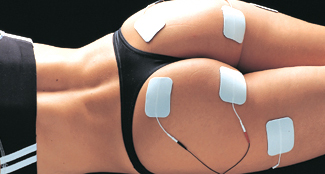
EMS + TENS
Electrical Muscle Stimulation (EMS)
EMS is to evoke muscle contraction by using electric impulses. These impulses are generated by a device and delivered through electrodes and pads adhered to the skin near the muscles to be stimulated.
The impulses mimic the signal coming from the CNS and cause the muscles to contract.
EMS can serve as a strength training, rehabilitation, recovery, and/or preventive tool for partially or totally immobilized people, or athletes.
Effects:
EMS promotes both neural and muscle fiber training that complement the effects of voluntary resistance training. Different types of fibers can be activated to differing degrees by different patterns of EMS activity.
These patterns, protocols, or programs, will cause a different contraction response from different fiber types. Some programs will improve fatigue resistance and endurance, others will increase force production.
Use:
EMS can be used as a training, therapeutic, and cosmetic tool. In medicine, EMS is used for rehabilitation purposes, such as to prevent ‘disuse muscle atrophy’ which can occur after musculoskeletal injuries, like damage to bones, joints, muscles, ligaments and tendons.
In EMS training, only a few muscle groups are targeted together for specific training goals. Some coaches use professional EMS devices as an integral part of the training of their athletes.
EMS devices cause only a marginal calorie burning and weight loss. Physical exercise allows several muscles, the heart, and the respiratory system to be engaged all at once.
Because of the effect that strengthened and toned muscles have on appearance it can be used for aesthetics goals.
TENS
In TENS, Transcutaneous Electrical Nerve Stimulation, an electric current is used for pain therapy.