Carbon-Silicon Bonds
Carbon-Silicon bonds
While carbon-silicon bonds are synthetically created in paints, semiconductors, computer and TV screens, pharmaceuticals, agricultural chemicals, fuels, etc., they have not yet been found in nature.
Although silicon is not part of our current C-based biological life form, it may have evolved on our planet a long time ago, because both are very similar in chemical make-up.

Cut branch of Silicon tree
Both are able to form bonds with 4 atoms at the same time, allowing them to link together the long chains of molecules, called polymers, in which it alternates with oxygen, needed to form the basis of life as we know it – proteins and DNA.
Carbon yields a polymer used in synthetic fibers and equipment. Silicon yields polymeric silicones, used to waterproof cloth or lubricate metal and plastic parts.
Outside the Star Trek universe, no living organism is currently known to put silicon-carbon bonds together, even though silicon is all around us, in rocks, on beaches, etc.

Nature exploits common metals in biochemistry, such as iron in red blood cells and magnesium in chlorophyll. Silicon, which has properties of metals and non-metals, seems to occur only in bio-inorganic compounds, like the silica shells of the single-celled algae diatoms.
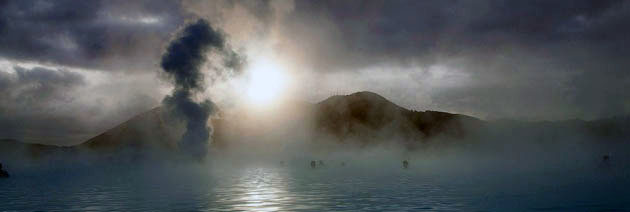
CalTech research experiments are now proof that these bonds can be formed in nature, under the right conditions. The researchers started by isolating a protein that occurs naturally in the bacterium Rhodothermus marinus, which thrives in the hot springs of Iceland.
Although this protein, called cytochrome c enzyme, is to transport electrons through the cells, the lab researchers inserted the gene for it into some E. coli bacteria. They kept mutating the protein gene within a specific region of the E. coli genome until the protein bonded silicon to carbon 15 times more efficiently than any synthetic catalyst.
Apparently, the DNA-encoded catalytic machinery of the cell can rapidly learn to promote new chemical reactions when we provide new reagents and the appropriate incentive in the form of artificial selection.

Handedness
When carbon unites with oxygen, during burning, it becomes the gas carbon dioxide; silicon oxidizes to the solid silicon dioxide, called silica. This is one basic reason as to why it cannot support life. Silica, or sand is a lattice in which one silicon atom is surrounded by 4 oxygen atoms. Silicate compounds that have SiO4-4 units also exist in such minerals as feldspars, micas, zeolites or talcs. And these solid systems pose disposal problems for a living system.
A life-form needs some way to collect, store and utilize energy. The energy must come from the environment. Once absorbed or ingested, the energy must be released exactly where and when it is needed. Otherwise, all of the energy might liberate its heat at once, incinerating the life-form.
In a C-based world, the basic storage element is a carbohydrate with the formula Cx(HOH)y. This carbohydrate oxidizes to water and carbon dioxide, which are then exchanged with the air. A C-based life-form "burns" this fuel in controlled steps using speed regulators called enzymes.
These complex molecules do their job with great precision only because they have a property called "handedness." If an enzyme "mates" with compounds it is helping to react, the two molecular shapes fit together like a shake of hands.
Many C-based molecules take advantage of right and left-hand forms. Nature chose the same stable 6-C carbohydrate to store energy both in our livers (the polymer glycogen) and in trees (the polymer cellulose).
Glycogen and cellulose differ mainly in the handedness of a single carbon atom, which forms when the carbohydrate polymerizes, or forms a chain. Because humans don’t have enzymes to break cellulose down into its basic carbohydrate, we cannot utilize it as food. But many lower life-forms, such as bacteria, can.
Handedness allows many C-based enzymes to recognize and regulate biological processes. Most Si-based life-forms do not have that option. Despite all the reagents available to the modern alchemist, many silicon analogs of carbon compounds are often too unstable or too reactive.
It is possible to think of micro- and nano-structures of silicon; solar-powered silicon forms for energy and sight; a silicone fluid that could carry oxidants to contracting muscle-like elements made of other silicones; skeletal materials of silicates; silicone membranes; and even cavities in silicate zeolites that have handedness.
The chemistries needed to create a life-form are simply not there. The complex dance of life requires interlocking chains of reactions. And these reactions can only take place within a narrow range of temperatures and pH levels. Given such constraints, carbon can and silicon can’t.
Most of Earth is made up of right-hand carbohydrates and left-hand amino acids. Why? Many chemists believe that the first "handed" carbon compounds formed in a "soupy" rock pool having a "handed" silica surface. And the handedness of this surface encouraged the creation of those carbon compounds now preferred in Earth’s life-forms.