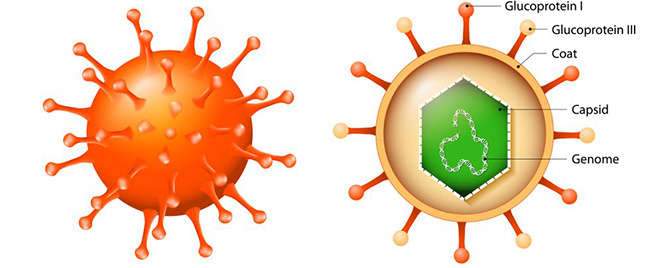
Cytomegalovirus
Cytomegalovirus
Cyto-megalovirus (CMV) is an illness you get from a type of herpes virus (an organism that uses your cells to make more copies of itself). Many people will get infected in their lifetime, but most will have mild or no symptoms.
Cytoplasm is a colorless viscous fluid that contains all the cell organelles. The cytoplasmic matrix is the insoluble, dynamic, gel-like substance present in the cytoplasm that is denser and more viscous than the cytoplasmic fluid. One may term it as the intracellular fluid of cytoplasm. Cyto = cell.
If you have a weakened immune system, you might get a new CMV infection or have a previous infection that reactivates when your body is no longer able to fight it off easily.
Symptoms depend on what part of your body the virus infects and could include:
- Fever.
- Fatigue.
- CMV pneumonitis (shortness of breath, cough, muscle aches, weakness).
- CMV retinitis (blurry vision or loss of vision).
- CMV gastritis or colitis (stomach pain, blood in your poop, nausea, vomiting, diarrhea).
- CMV encephalitis (seizures, headaches, confusion).
- Lasting cognitive issues, including trouble focusing, remembering and problem-solving.

Oberon device advanced readout
CMV can be treated with the antiviral medications ganciclovir (GCV) or valganciclovir (VGC), given directly into your vein, swallowed in a pill, or w/o any negative side-effects through a biofeedback device, using their respective wave signatures.
Even if you have a healthy immune system, symptoms of CMV can last for a long time. You may feel run down, tired or weak for several weeks, months, or years if the virus is used by one of your Paincatchers, to make you feel its discomfort and pain, thus encourage discharge, because:
Viruses are masters of deception, duping their host’s cells into helping them grow and spread. A study found that human cytomegalovirus (HCMV) can mimic a common regulatory protein so as to hijack normal cell growth machinery, thus disrupting a cell’s primary anti-cancer mechanism.
A viral protein, called UL97, masquerades as a normal regulatory enzyme to modify a tumor-suppressing protein in human cells. Unlike the normal enzyme, which can be switched on and off by the cell as needed, the viral stand-in lacks an off switch and evades cellular control.
The Cleveland Clinic findings represent a previously unknown way that micro-organisms can cause abnormal and uncontrolled cell growth and division:
Cells normally have tight regulatory mechanisms in place to limit multiplication to appropriate situations, such as replacing worn-out cells or repairing damage. Uncontrolled cell proliferation can lead to cancer and other disorders.
One of the most important cellular control mechanisms works through a protein called the retino-blastoma tumor suppressor protein, which slows cell growth.
The retinoblastoma pathway is like the brakes on a car. It prevents tumor cells from growing out of control. This pathway is mutated in essentially all human cancers.
They have names that usually end in …oma’s: carcinoma, adenoma, adeno-carcinoma, sarcoma, lymphoma, blastoma, etc. They can be benign or cancerous.

The Oma’s that showed up in the Blast Cell.
Behind each of the Oma’s in your body, is a remnant of a very substantial past trauma. A not yet fully felt and therefore not fully discharged emotion, such as yet unexpressed anger.
Disrupting this pathway is also advantageous for micro-organisms. Unable to reproduce on their own, viruses rely on co-opting their host’s cellular machinery, like an occupying army taking over a local factory. They are especially good at overriding or bypassing built-in control mechanisms.

CMV can be treated with the antiviral medications ganciclovir (GCV) or valganciclovir (VGC). Valganciclovir, may improve hearing. They work by preventing the spread of CMV disease or slowing the growth of CMV.
Viruses are well known to encode proteins that have similar activities to cellular proteins, but they’re just different enough to be beneficial to the virus: UL97 shares the same activities as the cellular protein, but it lacks any control mechanisms.
In essence, UL97 disables the brakes and hits the gas. Once a host cell is primed toward growth, HCMV takes over and steals the cell’s machinery to reproduce itself.
The virus’s bloodhound-like ability to seek out and target the most essential pieces of a cell’s machinery makes it a valuable research tool.
Viruses are smarter than we are. They know a lot more about cells than we do, because their life depends on it — they’re obligate intracellular parasites. If they attack a part of the cell — a process or a protein — you know it’s important for the cell. If the virus pays attention to it, you should too.
HCMV infection remains asymptomatic in most people, but has been implicated in some cancers and can cause trouble in people with a compromised or suppressed immune system, like all modern humans have.
It is often caused by the actions of your Darker Double, which can control the nervous system and actions of particular viruses, fungi, bacteria, or other parasites, it has selected.
In addition, UL97-like proteins are also found in the other seven human herpes viruses, some of which are directly linked to cancers.
The Oberon device lists exactly where the most active micro-organisms are in an organ, and their level of activity, which can then be countered with various means and then released by the lymph and blood vessels, the body’s real immune system, through the use of the software of this device.
The above applies to all forms of micro-organisms, such as Candida Albicans, Fungi, Bacteria, Helmints, etc. etc. Candida Albicans eats heavy metals. When it is killed it releases those toxins into our system, where the lymphe vessels will take these to the body’s exits.