Cosmic Engine
Su Song’s Cosmic Engine

Su Song’s automated clock, completed in 1092 during the Northern Song Dynasty, was a 12-meter-tall (approx. 40 ft) hydro-mechanical masterpiece known as the "Cosmic Engine" (Shui Yun Yi Xiang Tai). It is widely considered the world’s first fully automatic clock tower, integrating timekeeping, astronomical observation, and complex automation.
Core Mechanisms and Innovations
The tower utilized several groundbreaking engineering techniques that predated similar European technology by many centuries:
- Water-Driven Escapement: The clock’s most vital innovation was an early escapement mechanism that regulated the flow of water to ensure precise, jerky "tick-tock" gear movements, using 36 scoops to be emptied and filled.
- Endless Chain Drive: It featured the oldest known endless power-transmitting chain drive, the tian ti ("celestial ladder"), which linked the waterwheel to the gear systems.
- Constant Pressure Clepsydra: To maintain accuracy, it used multiple tanks to ensure a constant water level and pressure for the driving wheel.

Structure of the Tower
The tower was divided into three primary functional levels:
- Top Level (Armillary Sphere): A bronze power-driven armillary sphere used for real-time astronomical observations of stars and planets.
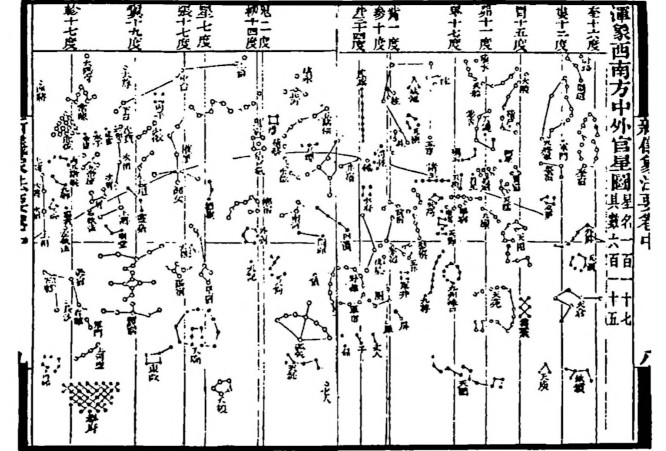
- Middle Level (Celestial Globe): A rotating bronze globe mapping over 1,400 stars, showing the movement of celestial bodies. See his celestial map in the banner.
- Bottom Level (Timekeeping Pagoda): A five-tier system featuring 133 mechanical figurines in Chinese clothes (automatons) that emerged from doors to ring bells, beat drums, and hold plaques indicating quarter-hour and hour, besides day of the month, and moon phases.

Historical Significance and Legacy
Su Song documented the entire design in his 1092 horological treatise, Xin Yi Xiang Fayao (Essentials of a New Method for Mechanizing the Armillary Sphere and Celestial Globe). Its detailed plans enabled the creation of modern replicas in museums, demonstrating its brilliance.
The original clock was looted and dismantled by invading Jurchen forces in 1127. Later attempts to reassemble it in Peking (Beijing) failed because the mechanical principles were too complex for others to master at the time.
Working full-scale replicas can now be found at the National Museum of Natural Science,Taiwan + Su Song Park, Xiamen.