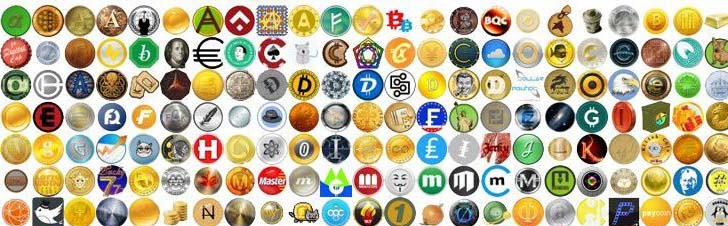
Crypto Currencies
Crypto Currencies
Deregulation and decentralization are central to its appeal
A crypto currency or digital currency is a means of electronic exchange. Contrary to currencies issued by the Central Banks (dollars, euros, etc.), the particularity of crypto currencies is that their "production" depends on quotas of natural or legal persons not subject to regulation or intermediation of financial institutions (led by the FED) and states.
This production process is known as "mining", in which networks of people or groups (called miners), equipped with hundreds of super-powerful processors compete on the internet to obtain the reward (crypto currency), by solving mathematical problem-complexes through running random numbers at very high speeds. Whoever manages to find the answer first receives the crypto currency and distributes it among the winning miners.

Since 2009, the global use and price of crypto currencies have increased exponentially, expressing not only the high demand for their acquisition, but also the high electrical-power consuming & low temperature facilities, low transaction costs and the security that they offer, since they can be monitored by those who make up the network and cannot be subjected to the global banksters. Now, they offer management services for hedge funds that are aggressively investing in crypto currencies.
Although initially designed as a means of digital payment, crypto currencies have progressively migrated into reserve currency, safekeeping of financial assets, or simply as an investment instrument. The value of a crypto currency depends on its demand and its reference to the currency with the greatest global influence such as the euro, the dollar and the yuan.
Blockchain
Blockchain (chains of payment blocks) is a digital book that in a decentralized and public way accounts for all crypto currency transactions. Each node (server connected to this network) is allowed to download a copy of each transaction. This system operates outside of the classical institutions of the international financial system.
It is basically an accounting system that generates a permanent record as a block, guaranteeing a more secure mechanism that is not regulated by a central authority to verify transactions made in cryptocurrencies.
The growth of cryptocurrencies has begun to generate concern among the masters of the world economy, that select club formed by multilateral financial institutions, large central banks and private banks of great weight.
The Bank of International Settlements (BIS), the financial institution that controls almost all transactions worldwide and directly linked to the omnipotent Rothschild clan of about 13 families, alerted their banks of "the danger" that the use of cryptocurrencies represented for their international financial system.
The system of crypto currency transactions favors anonymity and is thus used by criminal operations related to drugs and illegal arms trade, which so far were exclusively served by the same banks, who acted as a ‘washing machine’ for global drug trafficking and for paramilitary groups such as ISIS and Al Queda, etc. all created by the CIA & NATO.
The value of crypto currencies and the US dollar is now mostly based on "confidence" (a psychological factor, not material) since the Nixon administration broke the dollar/gold convertibility.
Given the low costs of electricity and the daily increase of the dollar vs the Bolivar in Venezuela, crypto currency mining has become profitable and attractive as a mechanism for access to foreign currency.
In a context of increasingly accelerated financial globalization, where nation-states are losing their internal control capacity, the regulation of crypto-mining in its entirety is highly complicated for anybody or any state.
Recently, Venezuela and Russia have announced the creation of national digital currencies to speed up their international trade. In the case of Russia, the currency will have the name of Cryptorubl, can not be mined and its exchange rate will be determined by the Central Bank of Russia. At no time does this decision lead to the legalization of other crypto currencies in Russia, so the initial approach is to take advantage of its advantages in a controlled manner.
The Venezuelan crypto currency (El Petro) is backed by the country’s oil, gas, gold and diamond reserves, and a Venezuelan Blockchain Observatory to give this digital currency legal and institutional basis.
The US is considering the possibility of applying also sanctions against the Russian debt, so the Russian government finds in the creation of a national crypto currency an immediate response to protect its debt and its financial connectivity in the world.
2017 has been a key year in the transition to an emerging financial system distanced from the dollar, where Russia and China have taken a leading role in the construction of a payment architecture, investment and commercial exchange at the regional level in their own national currencies, novel factors that do not necessarily rival the crypto currency.
Within the framework of this offensive, Venezuela has a vanguard role in that geo-economic projection that challenges the spinal cord of US political power globally: the dependence on the dollar.
Among the reasons that Russia alludes to launch its own national crypto currency is that its main geo-economic pivot, the Eurasian Economic Community, one of the most dynamic commercial poles in the emerging multipolar world, is to include this format of payments for its commercial exchanges.
Russia undoubtedly sees the benefits of using a payment system that does not depend on the dollar (beyond being used as a reference) and that allows us to avoid the imposed tax surcharges for the sanctions.
Venezuela suffers a voracious financial, economic and oil blockade that, beyond limiting its access to the debt markets, has gone so far as to block its most elementary transactions for the payment of external debt and for the importation of medicines and food. at a time when the population requires it most.
The possibility opens, with the use of crypto currency, that Venezuela and Russia speed up their levels of cooperation and financing, by finding a common route to increase financing in the energy field, a critical area for the country’s economic sustainability in the medium term. The crypto currency offers an alternative for this situation, since it could function as a financing mechanism in foreign currencies and payment outside the US banking system.
The amount of crypto currency to be issued will depend on the government needs at the time, its conditions and in what quantities of ounces of gold, barrels of oil, BTU of gas or carats of diamonds to determine its value, as well as its insertion in the map of crypto currency payments worldwide. Also, once placed in operation, it will be related to the parallel dollar market based on the value of "El Petro", and whether it could have an impact on the bottom line that drives inflation in Venezuela every day for political reasons.
The Venezuelan crypto currency could bypass US financial sanctions, with the possibility of issuing debt and offering a degree of anonymity in its centralized Blockchain system, protecting the creditors to be sanctioned and achieve the necessary access to foreign currency.
Cryptocurrencies can be used as tools for sanctioned countries, since they are not subject to control or intermediation by US and European financial institutions. It will improve the lives of millions, and represents a major counter-attack against globalist bankers’ hegemony.
In today’s market, the top eight coins have a market cap of over $1 billion each. With over 750 coins for speculation, it is realistic to assume that not all of them will survive. Ethereum is used for its Smart Contracts, Ripple and Litecoin as innovative, fast micro-transaction payment networks, and Bitcoin as the store of value and a payment network.
As we see blockchain technology slowly being integrated into the general public’s lives, we could see an even more violent surge of growth within the space, which may eventually lead to a bubble, and then in the aftermath pave the way for mass adoption of the technology and its uses.

Litecoin
Often referred to as "silver to Bitcoin’s gold", Litecoin was amongst the first cryptocurrencies to be introduced into the digital space. Similar to its more popular cousin, Litecoin relies on an open source world-wide payment network that lacks centralization under a single authority.
However, unlike Bitcoin, this crypto currency is mined (created) via "scrypt algorithm," an entirely different proof of work algorithm to Bitcoin. Some commentators note that Litecoin is a more attractive crypto currency due to its faster block generation time (2.5 minutes to the Bitcoin’s 10), thus it enables a more expedient confirmation of the electronic transaction. In November 2017, Litecoin’s market capitalization reached some $4 billion, demonstrating strong growth. The value of an individual Litecoin stood at $104.
Dash
Owing to its easy and secure protocols, Dash is quite popular with the digital community, and its capitalization rests at about $4.8 billion. A single Dash coin is worth about $696.
Ether
Ether forms an operating token for the Ethereum, an open, block-chain, decentralized software platform, which enables the network’s users to codify, develop and operate applications within the system. Ethereum was funded by the pre-sale of some 11.9 million Ethers, reflecting the high public support for the platform. The network’s market capitalization exceeds $4.46 billion and Ether’s price currently stands at $430.
Zcash
Digital payments through Zcash are posted on a public block-chain, yet the users may choose to enact an optional privacy protocol that can conceal the sender, the receiver and/or the amount of funds transferred. Another distinct feature of Zcash is the "selective disclosure" mechanism than allows the users to audit their payments via the cybercurrency. Its current value is $316.
Monero
The mining protocols for Monero tend to be more "egalitarian," allowing its community to enjoy a more distributive mining scheme. Unlike Bitcoin, it is not a public-ledger currency, thus its units are indistinguishable from each other, enhancing anonymity of users and making it a popular coin for transactions on the dark markets. Monero’s value is about $277.
Marketable, valuable assets backed crypto currencies may become the safest means of exchange in the future. Digital coins issued by those assets backed enterprises or groups of enterprises may become some of the most secure currencies. Their intrinsic value is then directly related to the publicly traded stock value of those enterprises.
Global 2022 Reset?
It is expected that a major global financial reset will occur in 2022, initiated, orchestrated, and maintained by most Global Central banks, each of them issuing their own digital crypto currency, which together will form a new global currency, the BankCore. It will exist besides the current currencies that have no more an intrinsic value, just a digital value.