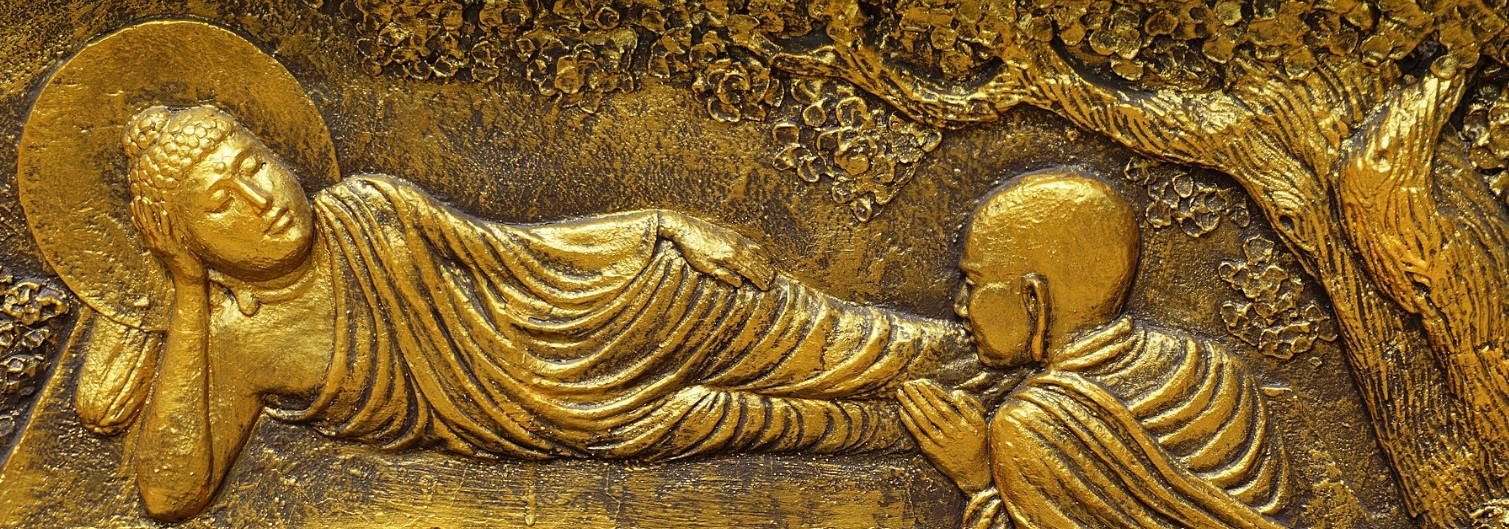
Arhats or Luohans

Arhats or Luohans

The 18 Arhats (or Luohans in China:十八羅漢) are depicted in Mahayana Buddhism as the first followers of the Buddha:

Kek Lok Tong Temple, Ipoh, Malaysia

They followed the Noble 8-fold Path and attained the 4 stages of enlightenment. They have reached the state of Nirvana and are free of worldly cravings.


They are charged to protect the Buddhist faith and to wait on earth for the coming of the Maitreya Buddha prophesied to arrive here many millennia after Gautama Buddha’s death.


Bodhisattvas are noted for their compassion, arhats are noted for their intense powers of spiritual concentration.


It is common for Chinese artists to exaggerate certain features in them, to emphasize their spiritual nature. They are often given qualities associated with Taoist immortals.


In China, the arhats are popular in Buddhist art, like glazed pottery Luohans from Yixian (≈1000 CE.)


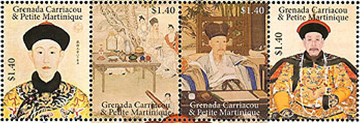
Qianlong was a great admirer of the Luohans and when he saw the paintings in 1757, he not only examined them closely, but also wrote an eulogy on each Luohan image. Copies of these eulogies were preserved in the monasteries.


In 1764, Qianlong ordered that the paintings held at the Shengyin Monastery be reproduced and engraved on stone tablets for preservation. These were then mounted like facets on a marble stupa for public display.

Luohan cut out of jade and attached to black lacquer.
read more …


Similar Posts

  • Temple of Heaven

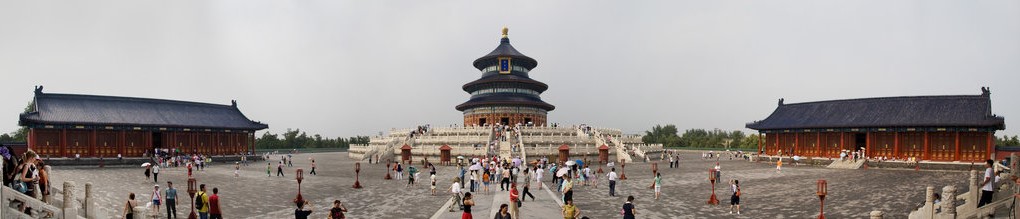
    Temple of Heaven 天坛 Fu Lion holding a harmonious world (Flower of Life pattern) Feng shui Fu Dogs or Imperial Guardian Lions are a strong feng shui protection symbol. Fu Lions were traditionally placed in front of Imperial palaces, temples, and government offices. They were a traditional feng shui symbol of family wealth, dharma, and…

  • Qianlong as Manjushri

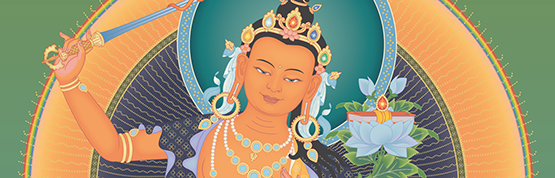
    Qianlong as Mañjuśrī Nurhaci, a military leader of the Jurchens of Northeast China and founder of what became the Qing dynasty, named his tribe after Mañjuśrī as the Manchus. This painting is arranged with Qianlong at the center of a cosmogram, a symbolic universe. The background shows clouds and the 5-peaked sacred Wutaishan mountain. He…

  • Chinese Characters

    Chinese Characters 曆 (Li = calendar) 虬 (Qiu = dragon) 龙 (Long = dragon) 钱 (Qian = money) 钱币  (Qianbi = coin) 乾 (Gan = male, strong) (弘 (Hong = great, liberal) 天子(Tiānzǐ= Son of Heaven) 白龙 (Bai long = white dragon) 金龙 (Jinlong = golden dragon) 魔鬼 (Mogui = demonic dragon) 钱龙 (Qianlong =…

  • Yongzheng Emperor

    Yongzheng Emperor Under Yongzheng’s rule the country’s finances skyrocketed, corruption was minimal, and political power was directly controlled by him. Country and people were prosperous. The Lama Temple was built in 1694 during the Qing Dynasty as the residence for the Yongzheng Emperor when he was a prince. After Yongzheng ascended the throne in 1722,…

  • Qinglong Emperor

    Qianlong Emperor (25/9/1711 – 7/2/1799)    乾隆帝 (lasting eminence) Strong; Intense/grand/prosperous/eminently thriving; Emperor Qianglong Manchu Family tree Cherished Empress Xiaoxianchun (Lady Fuca Rongyin: Mu-28/3/12-8/4/48) Hongli became Emperor Qianlong: Qianlong Emperor before abdication: Only 10 sons & 17 daughters reached adulthood General Fuk’anggan (Mu-1753-1796) Some of his 29 concubines, consorts, etc. are: Step-Empress Hoifa-Nara (Mu-11/3/18-19/8/66) Consort…

  • My heavenly play-script

    My heavenly play-script 我的天堂剧本 my heavenly drama, opera Twin Longevity Pavilion The Twin Longevity Pavilion was built by Emperor Qianlong in Zhongnanhai (Chinese ‘White House’) to celebrate his mother’s 50th birthday in January of 1742. It was moved to the Temple of Heaven complex in 1975. It has a very unique tapered-ring and cone-shaped, double-layer…