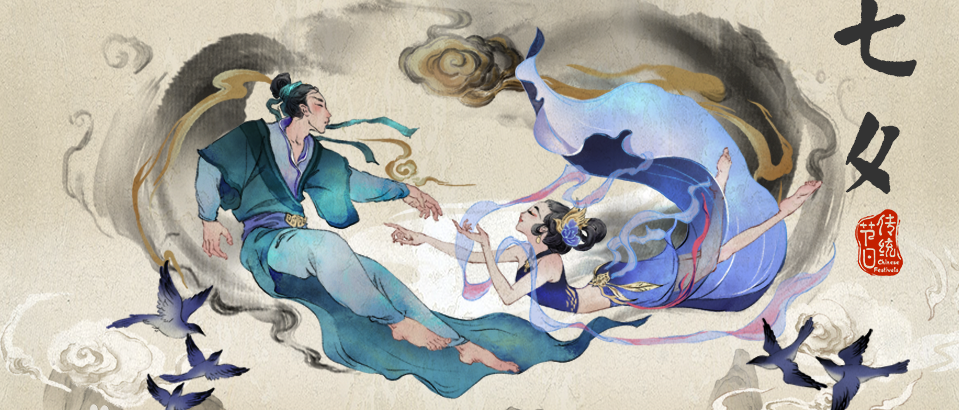
7&7-twinflame-day
THE 7&7 STAR CROSSED LOVERS
Aquila is a constellation right on the celestial equator. It has 143 notable stars. It was described by Ptolemy, and is now one of the 88 constellations defined by the IAU. It was also known as Vultur volans (the flying vulture) to the Romans. Vultur cadens was their name for the Lyra constellation.
Aquila is Latin for ‘eagle’. It represents the bird that carried Zeus/Jupiter’s thunderbolts in Greek-Roman mythology.

Altair or α Aql is the brightest star in Aquila, it rotates quickly, and is only 17 LY away. Its name comes from the Arabic phrase al-nasr al-tair, meaning "the flying eagle". Altair is one of the 3 stars of the Summer Triangle asterism:

The Summer Triangle is an astronomical asterism in the northern celestial hemisphere. The defining vertices of this imaginary triangle are at Altair, Deneb, and Vega, each being the brightest star in their respective constellations.
Vega or α Lyr is the brightest star in the constellation of Lyra. It is only 25 LY away, and is the 2nd-brightest star in the northern celestial hemisphere, after Arcturus.

The Eagle and the Swan
From northern latitudes:
• It rises at sunset and sets at sunrise.
• it is visible in the E-sky in early mornings during spring.
• In autumn and winter evenings, it is visible in the W-sky.
Until the late-20th century, the US Air Force navigators referred to this asterism as the "Navigator’s Triangle".
These are the same stars recognized in the Chinese legend of The Cowherd and the Weaver Girl, a story dating back some 2,600 years, celebrated in the annual Qixi Festival:

The Qixi Festival, or 7-7th Festival, falls on the 7th day of the 7th lunar month.
.gif)


Roëll-77-silver-advocaat-lepeltje


East coast Longshoremen’s strike in 1977

29780=26 77 strikes 29708=26


7700


In 1776, close to his mother’s death in 1777, the Chinese Qianlong Emperor visited the Yellow Emperor‘s mausoleum, and placed a stone tablet with the characters "Ancient Yellow Emperor’s Tomb in Qiaoshan, part of the Taoist tradition.

"Qixi is a day full of romance because of an ancient love story about Niulang and Zhinu (Cowherd and Weaver Girl).
- Niulang, or Altair star, the brightest star in the constellation of Aquila, and
- Zhinu, or Vega star, the brightest star in the constellation of Lyra.
In the Han Dynasty (202 BC – 220 AD): Zhinu (Vega) was deified as a skillful weaver girl waving clouds, and at the same time patroness of females and kids. Hence, young girls prayed for skillful hands on the 7th day of the 7th lunar month, considered as the birthday of Zhinu.
During the Song Dynasty (960 – 1279 AD): the custom of praying for ingenuity on the 7th day of the 7th lunar month had been very popular. There were even specialized markets selling the stuff for the praying ceremony.
The most popular version of this love story is about Zhinu, the Weaver Girl and Niulang, the Cowherd. Their love was banned by Zhinu’s parents and Niulang was exiled to the earth. One day, when Zhinu came down from the stars to the earth for a bathing, the two met each other. Zhinu then decided to stay on the earth without permission, got married with Niulang and gave birth to two lovely kids.
But happy time did not last long. Zhinu’s mother, Xiwangmu, also known as Heavenly Queen Mother, found out and sent heavenly soldiers to take Zhinu back by force.
Then, Niulang took their two kids and chased them. When Niulang was getting too close, Heavenly Queen Mother hurled her hairpin to create a river, the Milky Way, between them.
Sorrowfully, Niulang and Zhinu cried from the bottom of their hearts. This moved magpies and they flew over to form a bridge over the river for the two to meet in the center.
The Heavenly Queen Mother was also moved and allowed Niulang and their kids to stay in the heavens once a year on the 7th day of the 7th lunar month with the help of magpies.
At old age they both turned into the stars Altair and Vega, forever looking at each other from either side of the Milky Way’s galactic equator.

This is celebrated by the Chinese as their Valentine’s day.


"Saba Saba"

The Blue Willow Legend:
This legend and pattern is not a Chinese one, but thoroughly English,
created by Thomas Turner of Caughley, Shropshire, England,
in 1779, as a marketing ploy:

A wealthy Mandarin gentleman had a beautiful daughter named Koong-se. They lived in a beautiful pagoda under an apple tree, and close to a bridge with a willow tree.
The Mandarin’s secretary, a man named Chang, fell in love with his daughter. This angered the father greatly because he believed Chang was not worthy of his daughter. He banished the secretary and constructed a fence along the estate’s borders to keep him out. His daughter could only walk within the fenced gardens and over the bridge to the water’s edge.
One day, Chang fitted a shell with sails, and put in a poem and a bead Koong-se had given him. He floated the shell boat to the water’s edge where Koong-se found it and knew that her lover was near.
Koong-se’s father informed her that he had arranged a marriage to Ta-Jin, a wealthy merchant and warrior Duke. She was devastated when told that the Duke was arriving with a cask filled with jewels for her as an engagement gift, and a banquet was to be held in their honor.
After the banquet that night, Chang borrowed the robes of a servant and snuck into Koong-se’s room. The lovers embraced and vowed to run away together.
The Duke, the Mandarin, and the guests got drunk, so the couple tried to get away unseen, but her father saw them and chased them across the bridge. However, the couple escaped.
Koong-se gave the cask with jewels to Chang. The Mandarin, who was also a magistrate, claimed Chang was a thief and vowed to have him executed. One night, the Mandarin’s spies reported seeing Chang near a raging river. To escape the spies, Chang jumped into the raging water and Koong-se was afraid he had drowned. He did not however, and the couple escaped to an island where they hid away for years.
Chang became an author and his fame grew for his writings. This was the couple’s undoing. The Mandarin sent his guards and Chang was killed by the sword. In her grief, Koong-se set fire to their house with her inside, so both lovers died.
The Chinese gods were touched by the depths of their love and immortalized the star-crossed lovers by turning them into doves who now eternally fly the skies together.

7 seas
7 continents
7 days in a week
7 cervical vertebrae
7 phases of the moon
7 colors in the rainbow
7 notes in the musical scale
7 other planets in our solar system

7 rotations
7 star stones
7 lobed labyrinth
7 lobed rose window
